Skip to content

Garage door guides for Sheridan, Fort Logan & Denver metro homeowners

(000) 000-0000
Call (000) 000-0000

Guide

How Colorado Weather Affects Garage Doors

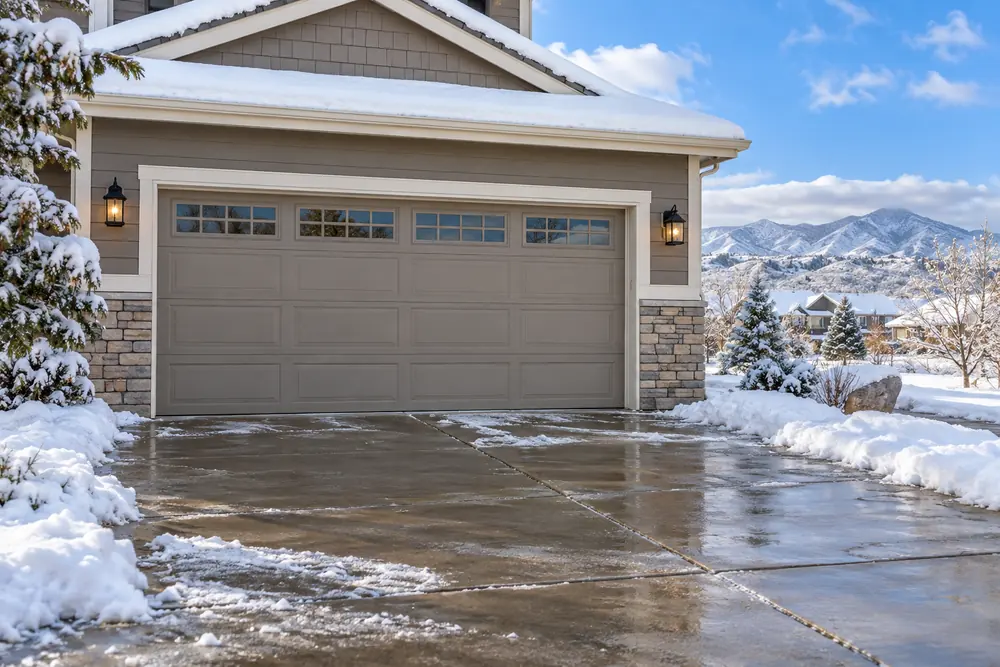
Colorado suburban garage after a spring snowstorm with wet driveway and distant foothills

Front Range weather is hard on springs, seals and finishes. This guide explains what cold, snow, hail and sun do to a door and gives a seasonal checklist.

Cold and the springs

Springs do not break because it is cold, but weather affects how long they last. DASMA's technical note on spring cycle life says doors left open for long periods expose springs to more temperature, moisture and air-quality variation, and advises keeping doors closed where possible in climates with extreme heat or cold or frequent precipitation. It also says rust reduces the strength of spring wire and creates pits where fatigue cracks can start. A spring near the end of its life often fails when it is working hardest, so a break on a cold morning is common.

Snow, slush and the bottom seal

Wet snow melts off cars, runs to the threshold and freezes the rubber bottom seal to the slab overnight. Pressing the button against a frozen seal can tear it, bend the bottom section or strain the opener. Clear slush from the threshold, let the seal thaw and replace a seal that has split. A seal that is cracked or flattened also lets in wind-driven snow.

Hail damage

Hail dents steel doors, especially thin single-layer ones, and can crack some composite and fiberglass skins. Scattered shallow dents are usually cosmetic. A crease across a section or a crack near a hinge can change how the door runs. Photograph each section after a storm, with the date, and ask your insurer about coverage separately from the repair; see panel replacement.

Sun and dry air

Strong sun at altitude fades paint and stain and dries out vinyl and rubber weatherstrip, which then cracks and pulls away. Wood doors need refinishing more often on sunny exposures. A faded door is also harder to match if one section is later replaced.

A seasonal checklist

  1. Spring: after hail, photograph each section; check the bottom seal for tears from winter.
  2. Summer: look at weatherstrip and paint on the sunniest side; run the monthly reversal test with a 2x4 laid flat on the floor.
  3. Fall: check the springs from the floor for rust and gaps, and replace a cracked bottom seal before the first freeze.
  4. Winter: keep the threshold clear of slush and do not force a frozen door.

For the decision on an older, weathered door, see the repair-or-replace guide.

Also worth knowing

Why do garage door springs seem to break in cold weather?

A spring near the end of its cycle life often fails when it is working hardest, and cold mornings are common in Colorado. DASMA says extreme heat or cold, moisture and rust all shorten spring life. The weather is the trigger, not the underlying cause; the spring was already worn.

How can I keep the bottom seal from freezing to the floor?

Clear slush and meltwater from the threshold before evening, and replace a seal that is split or flattened so water does not pool under it. If the door is frozen down, do not press the button repeatedly; let it thaw.

What should I do after a hailstorm?

Photograph each section from the driveway with the date, check whether the door still opens and closes smoothly, and look for creases or cracks rather than only dents. Keep the photos for your insurer, and ask your technician whether a section can be matched.

Does Colorado sun damage garage doors?

Over time it fades paint and stain and dries out weatherstrip, especially on south- and west-facing doors. Wood doors need refinishing more often, and a cracked weatherstrip lets in wind-driven snow. Fading also makes it harder to match a replacement section later, so note the door's color name from the original paperwork if you have it.

Should the garage door stay closed in winter?

Where practical, yes. DASMA's note on spring life advises keeping doors closed where possible in climates with extreme heat or cold or frequent precipitation, because long periods open expose the springs to more temperature and moisture changes. A closed door also keeps drifting snow off the floor and away from the bottom seal and the sensors.

Plan your call

Call now